


In the world of artisanal baking and pastry making, the quality of the final product depends on three fundamental factors: excellent raw materials, technical expertise, and appropriate professional equipment. While the first two elements are often the focus, choosing the right tools represents a strategic investment that directly impacts productivity, food safety, and organoleptic results.
Whether in an artisanal workshop or a larger-scale production facility, every professional faces daily challenges with dough kneading, leavening, and processing that require reliable, hygienic, and functional surfaces. The difference between generic equipment and a professional solution is measured in terms of durability, ease of use, and compliance with food contact regulations.
&nsbp;
A baker who processes large quantities of dough for bread, focaccia, or pizza on a daily basis knows how crucial it is to have surfaces that do not retain moisture, that resist the wear of metal spatulas, and that can be quickly sanitized between each batch. Likewise, a pastry chef preparing delicate dough for croissants or puff pastry needs surfaces that maintain the optimal temperature and offer the right grip without requiring excessive use of flour.
Before delving into the technical specifications, it's helpful to understand the main categories of equipment essential to a professional laboratory. Alongside large machinery such as mixers, ovens, and proofers, there are seemingly simpler tools that are equally crucial for ensuring efficiency and quality.
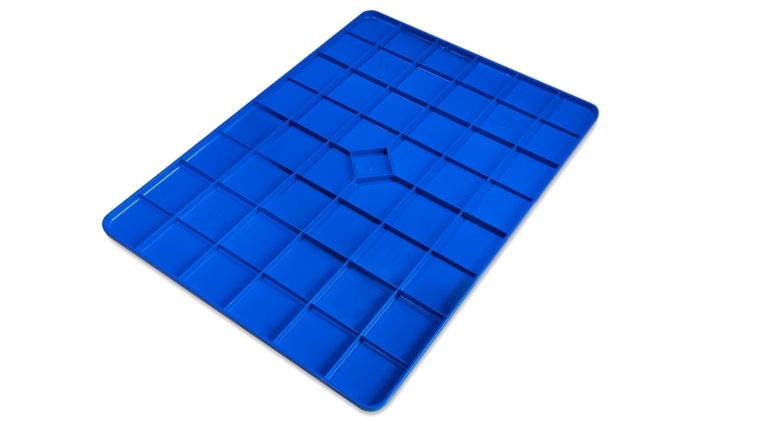
This category includes all tools that come into direct contact with the dough during the handling, rolling, and shaping phases. These include professional cutting boards, workbenches, spatulas, scrapers, and proofing containers. The choice of materials in this area is crucial. Particularly delicate: they must be non-toxic, resistant to daily wear and tear, and capable of maintaining high hygiene standards even after hundreds of wash cycles.
The management of raw materials and semi-finished products requires containers designed to preserve the organoleptic characteristics of the ingredients. Perforated boxes for leavening, Stackable trays for finished products: each element must be integrated into an efficient logistics system that optimizes space and work times.
Among the essential equipment for bakeries and pastry shops, work surfaces represent the point of direct contact with the dough. Choosing the right material is not a secondary detail: each process requires specific characteristics in terms of adhesion, resistance, and ease of cleaning.
Traditionally, many bakeries have used wooden worktops, appreciated for their natural look and their ability to adhere to the dough. However, wood has significant limitations in terms of hygiene: it is a porous material that absorbs liquids, can splinter, creating difficult-to-clean spots, and, over time, becomes a potential habitat for bacteria and mold. HACCP regulations have progressively pushed professionals towards safer and more controllable alternatives.
Food-grade plastic boards have gradually replaced traditional wooden worktops thanks to concrete and measurable advantages. Unlike wood, certified plastic materials guarantee non-porous surfaces, easily sanitized, and free from the risk of cross-contamination. Quality food-grade plastic does not absorb odors, does not deform with moisture, and maintains its mechanical characteristics even after years of intensive use.
But not all plastics are the same. It is essential that the materials are certified for food contact according to European regulations (EC Regulation 1935/2004 and subsequent amendments), guaranteeing the absence of migration of harmful substances, and tested to withstand the thermal and mechanical stresses typical of a bakery.
The new ABS brushed board from IFT represents a significant evolution in baking equipment. The brushed surface process is not A simple aesthetic detail, but a functional feature specifically designed to meet the concrete needs of industry professionals.
The brushing process creates a uniform micro-texture on the surface of the board, generating a series of tangible benefits in daily operations:
When evaluating baking and pastry equipment, it's essential to consider several key aspects that go beyond the initial cost. Choosing a professional tool represents an investment that will accompany your daily work for years, and it's therefore essential to adopt a thoughtful and informed approach.
The first element to check is regulatory compliance. All equipment intended for food contact must meet the required certifications, and reliable suppliers always provide declarations of conformity and complete technical data sheets. This isn't just a formal requirement, but a concrete guarantee of the quality of the work and the safety of the products produced.
Thermal and chemical resistance is another key factor. Temperature fluctuations are commonplace in baking laboratories: from room temperature to cold storage, from proximity to ovens to air-conditioned environments. Materials must remain dimensionally stable without deforming, ensuring consistent performance under all conditions. Likewise, resistance to detergents used in daily cleaning procedures is essential. Equipment that deteriorates or loses its surface finish after just a few months of intensive use is a failed investment
Ergonomics and ease of use are often overlooked when purchasing, but they prove crucial in everyday use. Equipment that is too heavy, bulky, or difficult to handle slows down work and can cause physical fatigue, negatively impacting productivity and operator well-being. Ease of handling becomes particularly important in environments where workers work for many hours at a time, where every movement repeated hundreds of times can make the difference between a sustainable day and a tiring one.
Closely related to ergonomics is ease of maintenance. Surfaces that require complex cleaning procedures, specific products that are difficult to find, or excessive sanitization times slow down productivity and increase operating costs. The ability to clean equipment quickly and effectively becomes a determining factor in the choice, especially when managing different production processes throughout the day, alternating between sweet and savory doughs, processing delicate fillings and more robust preparations.
Versatility of use is another intelligent evaluation criterion. In a professional laboratory, where space is often a limited resource, multifunctional equipment optimizes both investment and physical organization of work. A work surface that can be used for both savory and sweet dough, that resists contact with acidic or particularly fatty ingredients, and that can be easily stored when not in use, represents a tangible added value compared to single-purpose solutions that require dedicated space.
Investing in certified professional equipment means choosing reliable partners for your daily work, where food safety and the quality of the final product go hand in hand. The IFT range of equipment for bakeries and pastry shops was born from listening to the concrete needs of industry professionals, translating operational requests into effective and long-lasting technical solutions.
Choosing the right equipment isn't simply about purchasing tools; it's about building the foundations of an efficient, safe production process capable of enhancing artisanal expertise through top-notch technical support.
Contact the IFT team, you'll find professionals ready to listen to your needs and recommend the best solutions for your laboratory.


 Digital Marketing