


Cured meat storage represents much more than a simple stocking practice: it's a process that requires knowledge, attention and, above all, the right tools. Whether it's an artisan delicatessen, a supermarket deli counter or a production facility, preserving the organoleptic characteristics of cured meats is essential to guarantee high quality and food safety.
Every day, industry professionals face concrete challenges: how to keep the aroma of an aged culatello intact? How to ensure that prosciutto crudo maintains its characteristic sweetness until consumption? The answers to these questions lie in a combination of scientific knowledge and practical solutions, where the use of professional equipment, specifically designed for food contact - such as the plastic and stainless steel equipment offered by IFT - plays a crucial role.
Understanding what happens to a cured meat product during storage means entering a world where chemistry, microbiology and physics are continuously intertwined. It's not just about "keeping something cool," but about managing a complex ecosystem where every variable can influence the final result.
Optimal cured meat storage is based on a balance that nature has taught us through centuries of tradition, but which science now helps us understand and control with precision. The ideal temperature for whole cured meats ranges between 10 and 15°C, a range that is not random but represents the perfect meeting point between different needs. At these temperatures, the enzymatic processes that contribute to product maturation continue to work slowly, developing those complex aromas that characterize quality cured meats, while potentially harmful microbial activity is kept under control.
Relative humidity, which should be around 70-80%, completes this picture. An environment that is too dry can cause excessive surface dehydration, creating that annoying "crust" that not only compromises the product's appearance but also alters its texture and the ability to slice it correctly. Conversely, excessive humidity can favor the development of unwanted molds. Modern equipment for cured meat storage allows this balance to be maintained constantly, eliminating the fluctuations that can compromise weeks or months of aging.
When we talk about cured meat storage, oxygen represents one of the most delicate factors to manage. The fats present in cured meats, especially the most prized ones rich in unsaturated components, are particularly sensitive to oxidation. This chemical process doesn't occur instantaneously but progresses silently, day after day, profoundly modifying the product's characteristics.
Oxidative rancidity initially manifests with a slight change in the color of the fat portion, which from pure white or pinkish tends toward yellowish tones. At the same time, volatile compounds responsible for unpleasant odors can develop. The texture of the fat portion changes, becoming more granular and less pleasant to the palate.
The commercial shelf life of a cured meat product is not an absolute value written on the package, but the direct result of how that product is managed from the moment of production until sale. Two identical cured meats, coming from the same production batch, can have completely different fates if stored under different conditions. Professional storage, which respects all optimal parameters, can significantly extend the product's life while keeping its quality characteristics intact. This doesn't mean altering the natural characteristics of the cured meat, but simply respecting those principles that allow the product to express its best for the longest possible time.
The storage of whole cured meats represents the heart of every respectable delicatessen or deli department. These products, which can weigh several kilograms and represent a considerable economic investment, require specific attention at every stage of processing and throughout their entire time in workshops or stores.
The moment when a whole cured meat arrives at the store is crucial. Before even thinking about where and how to store it, it's necessary to check its condition. The surface should feel dry to the touch, free from excessive moisture that could indicate problems during transport. The smell must be characteristic, never pungent or unpleasant. Any surface molds, if expected for that type of cured meat, must be the correct color and uniformly distributed. This initial check represents the first form of quality protection.
Once the product's suitability has been verified, transfer to storage areas must occur quickly, minimizing exposure to room temperature. The use of stainless steel carts can facilitate this operation, while ensuring compliance with hygiene standards. These apparently simple tools make the difference in the daily management of a point of sale, allowing quick and safe handling.
The storage cell for whole cured meats is a dedicated environment, where every element contributes to maintaining ideal conditions. Stainless steel shelving units, in addition to meeting HACCP regulatory requirements, can offer a series of practical advantages that are often underestimated. Their smooth, non-porous surface prevents the accumulation of organic residues and facilitates cleaning and sanitization operations, which in this sector must be frequent and thorough.
The arrangement of cured meats on shelves should never be random. Products must be positioned to ensure uniform air circulation around each piece, avoiding direct contact points that could create areas of greater humidity.
Behind every perfectly stored cured meat are professional equipment working in synergy. IFT Mantova develops and manufactures specific solutions for the food sector, including equipment for butcher shops and cured meat facilities, with particular attention to the needs of those who work daily with delicate products such as cured meats.
Stainless steel is not just an aesthetic choice but represents the ideal material for those working in the professional food sector. IFT equipment in AISI 304 and AISI 316 stainless steel meets the highest food safety standards, ensuring inert surfaces that don't release substances and don't interact with food products.
IFT modular stainless steel shelving units are specifically designed for cured meat storage cells. Their structure allows perfect air circulation, a fundamental element for maintaining uniform temperature and humidity on all levels. The shelves, made with welding techniques that eliminate cracks and angles that are difficult to clean, facilitate daily sanitization operations. The high load capacity allows for the storage of large-sized cured meats without risks of collapse or deformation.
Stainless steel handling carts solve an often underestimated problem: internal transport of cured meats. Whether moving products from the storage cell to the processing area or organizing restocking of the sales counter, these tools guarantee stability and hygiene. The swivel wheels, equipped with safety brakes, allow precise maneuvers even in tight spaces, while the fully washable structure enables quick and effective maintenance.
IFT equipment in certified food-grade plastic meets specific needs where lightness, transparency and versatility become fundamental added values. All products are made with materials compliant with European regulations on food contact, guaranteeing maximum safety and hygiene and preventing the transfer of potentially harmful substances to food products.
Perforated boards are among the solutions most appreciated by industry professionals, apparently simple tools but extraordinarily effective in the daily management of cured meats. Their structure with a perforated surface is not an aesthetic detail but a functional feature designed to ensure proper product aeration. IFT perforated boards, such as the TGRA model, allow air to circulate uniformly under the cured meats, preventing the accumulation of condensation and moisture, the main enemies of storage.
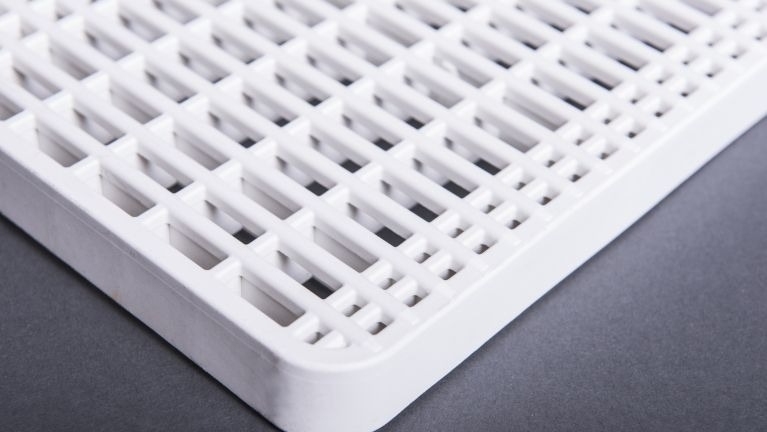
Food safety regulations require adequate tools that make the practical application of HACCP protocols possible. IFT supports professionals through solutions specifically designed for the food sector, which facilitate compliance with procedures while speeding up production processes. The design of IFT equipment prioritizes smooth surfaces, absence of cracks and resistance to professional detergents, transforming sanitization operations into rapid processes that never become a source of contamination.
Proper cured meat storage is not an operational expense but a strategic investment in the quality of the final product. Every cured meat that maintains its characteristics intact until consumption represents a satisfied customer and a greater probability of loyalty. Conversely, a product that disappoints expectations due to storage problems can significantly damage the business's image built over time.
IFT makes available to food sector professionals extensive experience in the design and production of specific solutions, where every construction detail is designed to meet the real needs of those who work daily with products such as cured meats.
Do you want more information about IFT solutions designed to optimize cured meat storage? Contact our team for personalized consultation!


 Digital Marketing