


Stracchino processing requires particular attention at every stage of the production process. This fresh soft cheese needs supports that respect its delicacy, ensure impeccable hygiene and facilitate daily draining, maturation and handling operations. Choosing the right crates is not a secondary detail, but an element that can directly influence the quality of the finished product and the efficiency of the dairy.
IFT has developed specific solutions for the dairy sector, placing particular attention on the needs of fresh cheese producers. The IFT food-grade plastic crate range stems from direct experience with artisan and industrial dairies, translating operational needs into reliable, hygienic and functional technical tools.
IFT provides the CFP39 plastic crate, a tool specifically designed to meet the needs of stracchino processing. Carefully designed by a team of dairy sector experts, this crate represents the ideal solution for those seeking high performance combined with ease of use and maximum hygiene.
The CFP39 plastic crate stands out for technical features specifically designed for processing fresh soft cheeses such as stracchino:
The flat bottom of the crate is particularly important in stracchino processing, a cheese that needs a uniform support surface during the whey draining phase. Unlike crates with perforated or highly draining bottoms, which might be more suitable for other types of cheeses, the flat bottom guarantees gentle support that preserves the integrity of the soft paste typical of stracchino, preventing the weight of the form from creating imprints or irregularities on the surface.
Flat-bottom crates fit perfectly into the different phases of stracchino production. During initial draining, after curd breaking and transfer into molds, the crate accommodates the forms allowing excess whey to drain gradually without mechanical stress on the paste. In the salting phase, the crate can contain the forms during brine immersion or during dry salting, facilitating handling and keeping the production process organized.
During maturation in the cell, the crates can be stacked to optimize vertical spaces, a fundamental characteristic in dairies where rational management of cold rooms directly affects operating costs. The possibility of stacking the crates stably allows storage capacity to be multiplied without the need for investments in complex shelving.
In the dairy sector, where hygiene is fundamental and the delicacy of the product requires particular attention, choosing the right crates becomes a strategic element of production quality. IFT food-grade plastic crates offer concrete advantages compared to alternatives in other materials.
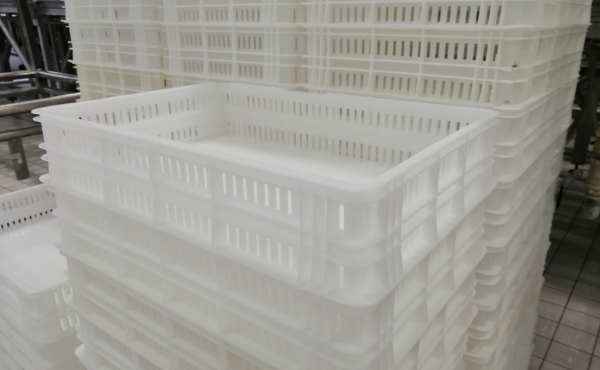
Absolutely yes. Unlike wood, traditionally used in some artisan productions but porous and difficult to completely sanitize, food-grade plastic does not absorb liquids, does not retain bacteria in interstices and can be subjected to intensive washing without deteriorating. This aspect is particularly important in processing fresh cheeses such as stracchino, where the bacterial load must be constantly controlled.
Plastic crates weigh significantly less than stainless steel or other metal containers, facilitating manual handling by operators. In a dairy where dozens or hundreds of forms are moved every day, this characteristic reduces physical fatigue and increases productivity.
Maturation cells and cheese processing environments have high humidity rates. Food-grade plastic maintains its characteristics unaltered even in the presence of constant humidity, without rusting, swelling or deteriorating as other materials might.
If you need more information about IFT plastic crates, don't hesitate to contact us!


 Digital Marketing